
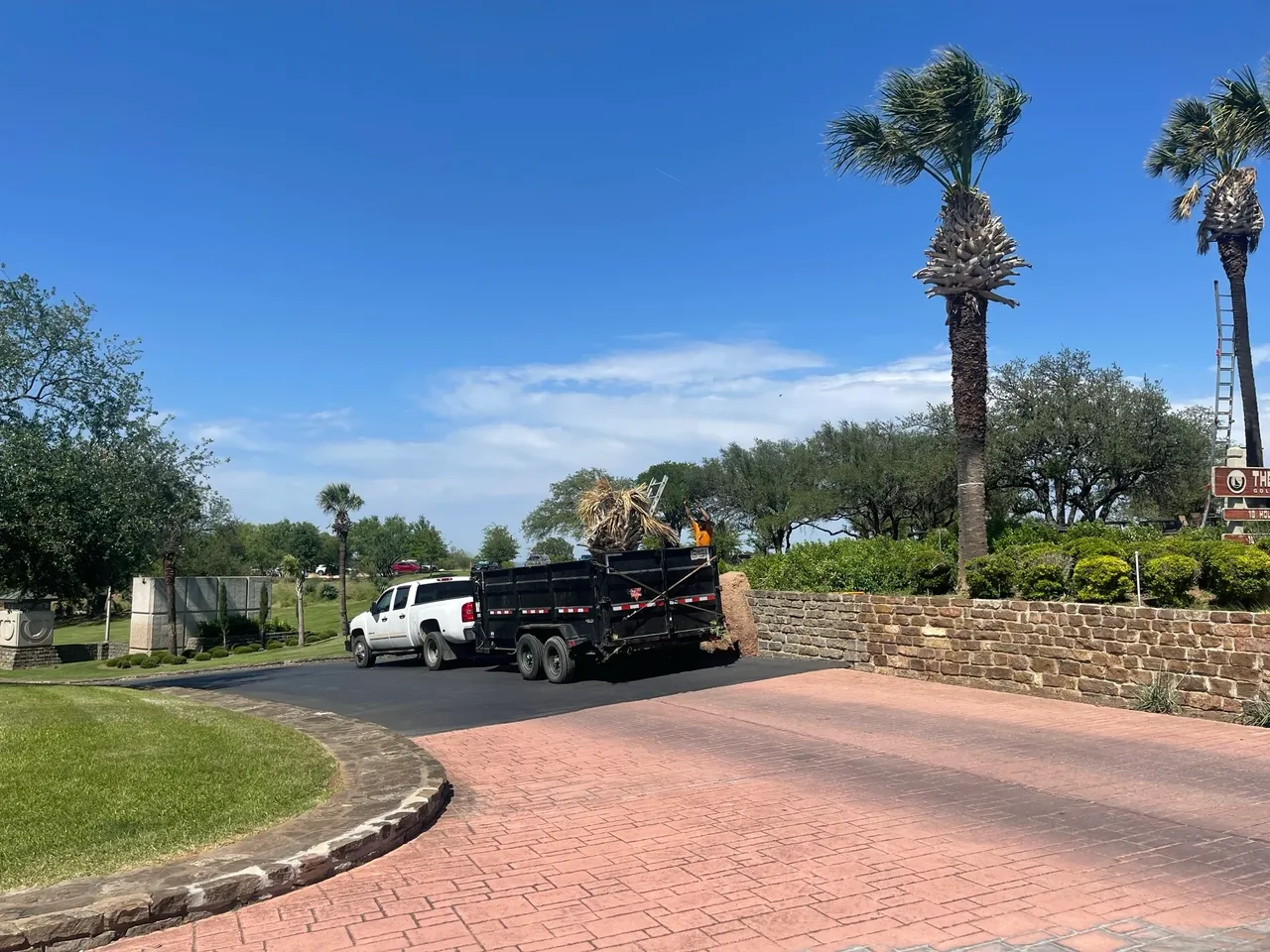
The tree is gone, but the yard may not feel finished. You might be looking at a bare patch, a stump area, or ground that no longer blends with the rest of the lawn. Before covering it with grass, consider which landscaping services belong in the next phase of the project.
Curtis-C Tree & Lawn Services provides landscaping and lawn services in Kingsland, Llano, and surrounding Hill Country communities, including light grading, sod work, mowing, and rock or gravel finishes. The place to start is with how you want to use the space, not just how quickly you can make it green.
Table of Contents
- Decide how you want to use the cleared space
- Prepare the former tree and stump area
- Consider yard grading services before new sod
- Choose a finish that fits your property
- Plan lawn services and care after installation
- Request a landscaping estimate in Kingsland or Llano
Decide How You Want to Use the Cleared Space
Start with a simple question: what should this part of the yard do for you? You may want continuous grass for a more open lawn, a cleaner edge along the driveway, or a space that requires less mowing.
Bring those priorities to the estimate. Walk the area with the crew and point out the existing grass you want to preserve, the paths you use, and any spots that have been difficult to maintain.
Curtis-C’s landscaping services focus on practical yard finishes, including sod, leveling, and selected rock or gravel areas rather than complex garden designs. Ask which of those options fits the space you actually have.
Prepare the Former Tree and Stump Area
If the stump has been ground, the remaining material needs attention before planting: wood chips and sawdust mixed into the soil can temporarily reduce nitrogen available to grass, and decomposing wood can contribute to settling (Iowa State University Extension). Do not treat a pile of grindings as a finished planting surface.
Before approving the next phase, ask what remains beneath the area and what preparation is included. Make sure your estimate distinguishes between tree removal, stump work, debris handling, and restoring the ground.
Iowa State recommends removing wood debris as thoroughly as possible and rebuilding the area with suitable topsoil before establishing grass (stump-area lawn restoration guidance). Ask how the plan accounts for settling rather than assuming new grass will hide an unfinished base.
Consider Yard Grading Services Before New Sod
If your main concern is an uneven surface, ask about yard grading services before choosing the final lawn finish. Curtis-C provides light grading and leveling to address low spots, high spots, ruts, and rough areas left around tree and land projects (Curtis-C’s grading and leveling services).
The goal is not to make every yard perfectly flat: Texas A&M AgriLife recommends preparing lawn surfaces so water drains away from buildings and avoiding depressions or excessive runoff onto neighboring properties (Turfgrass Establishment for Texas). Point out where water collects during rain, not just where the ground looks uneven on a dry day.
Use the estimate to separate ordinary surface leveling from a more involved drainage concern. If water is collecting against the house, ask whether the issue is within the proposed work or needs a separate specialist before proceeding.
Texas A&M also cautions against adding soil indiscriminately over the roots of trees that remain (Texas turfgrass establishment guidance). Show the crew which nearby trees you are keeping, and ask how their root areas will be protected.
Choose a Finish That Fits Your Property
Once the preparation plan is clear, decide where you want grass and where another finish makes more sense. Consider how people move through the space and how much ongoing care you want to take on.
- Sod for lawn areas: Curtis-C installs sod in full yards, partial sections, and areas where trees or stumps have been removed (sod installation services). Ask whether a targeted repair will meet your goals before assuming the entire lawn needs replacing.
- Rock or gravel for selected spaces: Curtis-C offers river rock, gravel, or crushed stone in selected areas such as driveway edges and high-traffic paths (landscape finish options). Discuss the material, boundaries, and intended use before deciding on the finished layout.
For areas receiving grass, selection should account for soil, shade, regional suitability, and the care the lawn will receive (Texas A&M AgriLife). Talk through the site’s current conditions rather than automatically choosing the same grass that was there before.
Plan Lawn Services and Care After Installation
New sod still needs establishment care: Texas A&M recommends keeping it moist until rooted while avoiding saturated soil that limits root growth (sod establishment guidance). Ask for watering instructions that fit the installation, current conditions, and any watering restrictions that apply to your property.
Before the crew leaves, confirm who handles the next stage of care. Useful questions include when to start mowing, what changes to watch for, and whom to contact if part of the repaired area settles.
Curtis-C offers mowing and large-area lawn services, particularly for larger properties and recurring customers after tree or land projects (lawn service details). Ask whether ongoing mowing is available for your property rather than assuming it is included in the installation estimate.
Request a Landscaping Estimate in Kingsland or Llano
Plan for the finished yard, not just the empty space left by the tree. Ask for a clear scope covering the preparation, the intended finish, and your responsibilities after the work is complete.
Curtis-C serves Kingsland, Llano, and surrounding Hill Country communities, with free on-site estimates available through its contact page. Call 325-423-5085 or request a free landscaping estimate to discuss the next step for your yard.